
Building Stronger Connections: EU's Plan for Sustainable Growth and Development
Published March 26, 2026
Goal: Promoting global cooperation.
 Community improvement
Clickbaity title? Suggest change
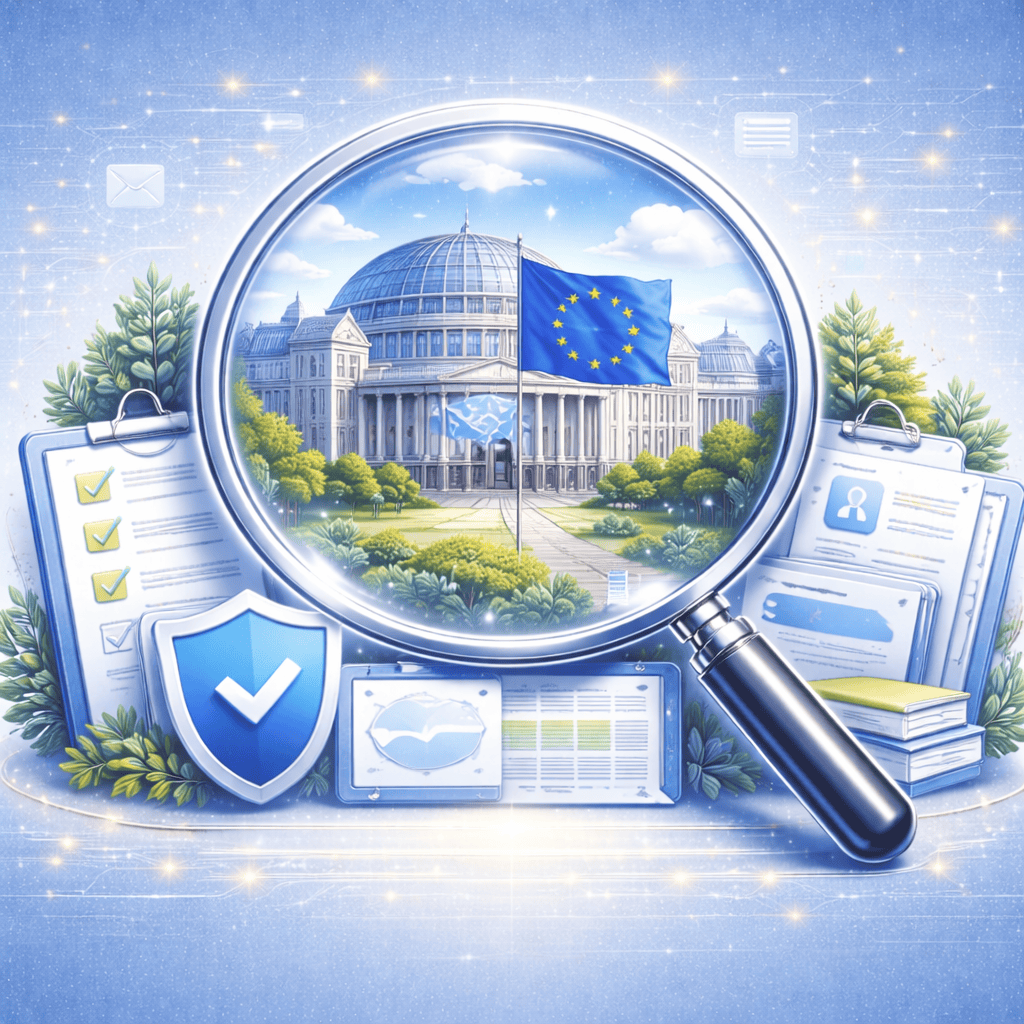
The European Parliament’s resolution on the Global Gateway (2024‑2029) is a plan that says the EU will spend €306 billion on smart, clean, and secure projects with partner countries, making sure the money follows development rules, helps local businesses, protects people and the planet, and keeps projects transparent and accountable.
Document summary The source
The European Parliament’s resolution on the Global Gateway (2024‑2029) sets out a clear, practical plan for the EU’s flagship framework that aims to build smart, clean and secure links with partner countries. The main points are:
Purpose and vision
- The Global Gateway is the EU’s answer to China’s Belt and Road Initiative.
- It is a long‑term strategy that combines foreign, economic and development policy to create sustainable, inclusive growth and to strengthen the EU’s geopolitical influence.
- Projects must support the 2030 Agenda, the Paris Agreement, gender equality, human rights and the EU’s social‑rights pillar.
Funding and financial rules
- €306 billion has already been mobilised by the end of 2024.
- At least 93 % of spending under the NDICI‑Global Europe instrument must meet official development assistance (ODA) criteria.
- The EU aims to spend 0.7 % of its gross national income (GNI) on ODA.
- Projects should use blended finance, guarantees, export‑credit agencies and the European Investment Bank (EIB) while avoiding debt traps and ensuring local value creation.
Project selection and implementation
- Flagship projects must be demand‑driven, involve EU and partner private sectors, and include European content.
- They should be transparent, use environmental, social and governance (ESG) criteria, and give local SMEs a real chance to participate.
- Projects must avoid state‑controlled companies from authoritarian states and must not create new debt burdens for fragile or conflict‑affected countries (23 % of the world’s population lives in such contexts).
Governance and accountability
- The Parliament must have a stronger, equal role in the Global Gateway Board and in regular reporting.
- A clear, transparent selection process for flagship projects is required, with objective criteria and regular monitoring.
- Civil society, local authorities, partner‑country parliaments and SMEs must be consulted and involved in decision‑making.
- The Board should meet more often, be operational, and include experts who can make decisions quickly.
Transparency and monitoring
- The Commission must publish detailed, up‑to‑date data on funding, procurement, local benefits, gender disaggregation and impact on SDGs.
- Regular impact assessments, including job creation, skills transfer and local value added, are mandatory.
- A unified methodology for measuring mobilised investment and for distinguishing ODA from non‑ODA funding must be adopted.
Trade, investment and partnership
- Projects should align with EU trade policy, support trade facilitation, and create market access for partner countries.
- The EU should coordinate with the UN, G7, and other like‑minded partners to maximise impact and ensure a rules‑based, multilateral approach.
- The Global Gateway should promote the EU’s green and digital agendas, ensuring projects are climate‑positive and technologically advanced.
Special focus areas
- Climate and water security, renewable energy, critical raw materials, and digital sovereignty are priority sectors.
- Gender equality, disability rights, and the empowerment of vulnerable groups must be integral to every project.
- The EU should avoid projects that increase debt vulnerability and should support debt‑for‑nature or debt‑for‑climate swaps where appropriate.
Future steps
- Codify the Global Gateway into the Global Europe regulation for legal certainty.
- Strengthen the Team Europe approach, ensuring national and EU‑level coordination.
- Improve communication and visibility of the Global Gateway, especially in partner countries, to build trust and attract private investment.
In short, the resolution calls for a more democratic, transparent, and results‑oriented Global Gateway that balances geopolitical goals with genuine development impact, protects local communities, and ensures that EU funding is used efficiently and responsibly.
Contextual Analysis
 This is one of the alternative context analyses generated by Ollama (qwen3.5:9b) and rated 3 stars. Other AI versions:
ChatGPT
This is one of the alternative context analyses generated by Ollama (qwen3.5:9b) and rated 3 stars. Other AI versions:
ChatGPT
Broader Context
This legislation establishes the Global Gateway as a strategic framework for the European Union to shape international cooperation. It is designed as a direct alternative to other global infrastructure initiatives, specifically China's Belt and Road Initiative. The goal is to combine foreign policy, economic interests, and development goals into a single long-term strategy. This approach ensures that international projects follow European standards for human rights, environmental protection, and climate goals. It represents a shift where the EU uses its economic power to promote a rules-based global order rather than relying solely on traditional aid.
Impact on EU Citizens
For people living in the EU, this means their public funds are directed toward projects that create jobs and transfer skills rather than just building infrastructure. It ensures that European companies have opportunities to participate in international markets while adhering to strict ethical standards. Citizens can expect greater transparency, as the EU must publish data on how money is spent and what impact it has. Additionally, the focus on avoiding debt traps protects partner countries from financial instability, aligning with ethical values regarding fair trade and development.
Key Principles
The framework operates under specific rules to ensure responsibility. At least 93% of spending must meet official development assistance criteria, meaning it must help poorer countries. Projects must use environmental, social, and governance (ESG) standards, ensuring they do not harm the environment or local communities. The EU also avoids working with state-controlled companies from authoritarian states and ensures that projects do not create new debt burdens for fragile countries. Furthermore, the European Parliament plays a stronger role in oversight, ensuring decisions are made with input from civil society and local authorities.
Licensing: This article is available under Creative Commons Attribution 4.0 (CC BY 4.0).